TL;DR
The difference between a casino that gives things away and one that designs gifting programs worth returning for isn’t budget. It’s intention. Intentional programs tell a story over weeks, build toward an anchor item that completes the set, and design the delivery experience with as much care as the item itself. The result is a multi-week continuity series that drives return visits, reinforces your brand, and treats the guest as someone worth impressing.
Most casinos have gifting programs offering things such as blankets, tumblers, coolers, or any other items that the supplier is selling. The items are delivered and the guests turn up, with no one really considering whether the whole arrangement is merely intended to occupy a spot on the calendar.
Well, that does work to some extent. The guests arrive, take what they need, and then go.
However, the properties getting the greatest return by means of their gifting schemes are adopting a different approach. Instead of starting with a vendor catalog and building from there, they begin with a single appealing item, build a range around it, and turn a one-night giveaway into a valid reason for customers to visit over several weeks.
Chris Province, founder of Player Performance Group and a Casino Marketing Boot Camp coach, calls this approach anchor item thinking. You start by identifying a single gift with enough appeal that a guest would make the trip to get it. Then you design two to four items that build toward it, week by week, so the anchor completes the story.
“Just pick any anchor item and then build two, three, or four items around it. It connects and creates a multitude of impressions instead of just one.”
— Chris Province
Instead of postcards that say “come get a toaster” one week and “come get a waffle iron” the next, you’re creating an expectation and an experience. The guest sees the series taking shape. By week two or three, they can picture what the whole set is building toward. They come back to see it through.
That shift from isolated handouts to a connected series that builds toward a goal is what separates a gifting program that fills a calendar slot from one that drives behavior.
What Makes Something an Anchor
An anchor item is the gift that has a strong influence, being the single item in the series that convinces a visitor to make the journey to obtain it. Examples include a wagon, a record player, and an espresso machine.
When you design a continuity program, you start with the anchor. It’s the first decision you make, even if it’s the last thing the guest receives. The ancillary items come first, building the story week by week. The anchor finishes it.
That’s what drives repeat visits. Each week, the guest picks up something useful on its own but clearly part of a larger set. By week two or three, they can see what the series is building toward. The anchor is the payoff. It completes the story. And if the anchor has enough pull, each ancillary item along the way feels like another step toward something worth coming back for.
Chris is passionate about one item that works almost universally: “I don’t care what year it is, one of your programs should have a wagon.” Wagons are big, visible, useful, and versatile enough to anchor a series featuring Solo Stoves, pop-up canopies, Smokey Joes, or gardening equipment, building toward them.
But wagons are just one example. The same logic applies to any item with the right mix of physical presence, broad appeal, and the gravity that makes everything else in the series feel like it belongs.
Size Beats Price Every Time
This is a lesson which might seem too simple to be important, but it affects the way you assess each and every gift in your list.
The physical size has a greater effect on perceived value than the dollar amount, though there is a point worth keeping in mind when it comes to evaluating smaller items.
A small gift has to feel premium to justify its size. If a guest can hold it in one hand and it doesn’t feel special, perceived value drops regardless of what you paid. An eighty-dollar headlamp that disappears into a pocket feels like less than a forty-dollar item that requires two hands to carry. The exception is when the brand and quality are unmistakable. A small item that reads as luxury can overcome its size. A small item that reads as average? Nobody’s making the trip for it.
This doesn’t mean every gift needs to be enormous. It means that when you’re evaluating anchor candidates, physical footprint matters. Between two items at a similar price point, choose the one that takes up more space, feels substantial, and can be seen from across the room. And if you’re going to go small, the quality has to be unmistakable enough to carry the weight.
Building the Gift Series Around the Anchor
When you have your anchor, the next thing to consider is which two or four items go naturally with it?
The Breakfast Program
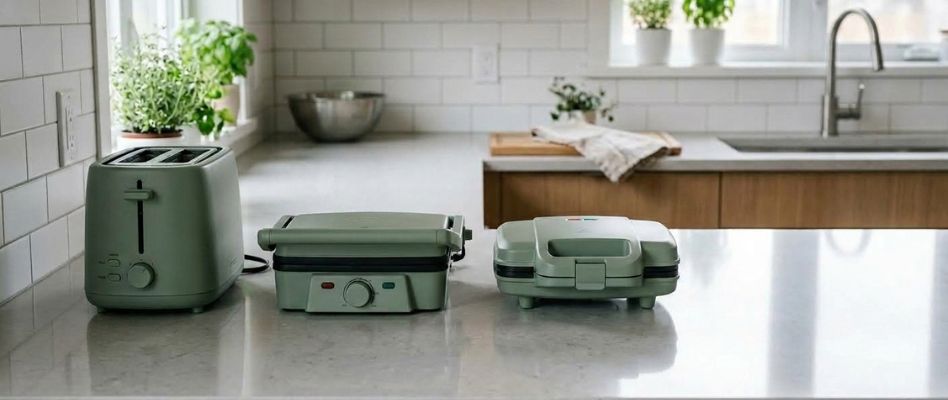
In weeks one to three guests receive a set consisting of a matching toaster, a griddle and a waffle iron, all of which are the same colour. Each of these items has its own usefulness. By the third week it becomes clear what is going to happen. In week four the coloured coffee maker is delivered and then the breakfast station is complete. The guest hasn’t simply collected four random kitchen appliances; they have built something.
The Tailgate Program
At Casino Marketing Boot Camp Midwest, one team designed a tailgate series that built toward a turducken. Week one: a portable fire pit grill. Week two: a pop-up tent in team colors. Week three: a cornhole game featuring the university logo. Week four: the turducken. Everything you need for game day arrived in the right order, with the tailgate’s centerpiece as the finale. Each pickup earned an entry into a weekly football pick ’em challenge, and guests who collected all four were entered into a drawing for season tickets.
The Coffee Program
Another team partnered with a local roaster for week one, built a coffee tasting right on the gaming floor, then followed with a premium tumbler in week two. Week three: the espresso machine. By the time guests picked up the anchor, they already had the beans and the cup. The series built anticipation. The machine completed it.

The Backyard Movie Night
Week one: a set of indestructible outdoor glasses. Week two: zero-gravity chairs. Week three: the projector and screen bundle. The guest already had the seating and glassware. The projector completed the picture. Everything they need for a movie night at home, assembled one week at a time.
Notice what all of these have in common. The items belong together. Each week adds to the story the guest is building. And the anchor, arriving last, is strong enough to make the whole series feel complete.
A Blue Ribbon Winner: Why Local Bakers Beat Frozen Pies.
When I worked for the original Bally’s, we gave out turkeys at Thanksgiving. It required a freezer truck, days of distribution, and long lines snaking through the parking lot. The next month, we gave Junior’s Cheesecakes. They were meaningful to our guests on the East Coast but had no connection to our New Orleans community.
Food gifts are effective only when they appeal to both the guest and the market; if they don’t do that, all you’re actually doing is handling cold logistics.
And for a regional casino, the pie itself is worth rethinking. Most properties call Sysco and order frozen pies by the pallet. That gets the job done. But what if you partnered with the bakery everybody in your market already knows? One Boot Camp property did exactly that. They worked with Bella Bru, a local bakery and restaurant in the Sacramento area, and had 700 fresh pies boxed, wrapped, and delivered for that weekend’s giveaway.
That’s two brand signals in one gift. You’re giving your guest something genuinely delicious for their Thanksgiving table, and you’re supporting a local business your community already loves. For a regional casino that depends on local loyalty, that second signal matters as much as the first. Who would turn down a fresh pie on their Thanksgiving table?
The pie was already an anchor. Add a pie server for higher-tier guests, and you’ve turned a twenty-dollar pie into a fifty-dollar experience. The following month, add a set of dessert plates in matching colors, and you’ve built a continuity series around something your guests already proved they’ll show up for.
Match the Colors, Match the Feeling
Here’s a detail that separates a thoughtful gifting program from a random collection of items across similar categories.
If your breakfast series comes in blue, green, and yellow, and you follow it next month with a food storage program, match the colors—blue containers. Green lids. Yellow accents. The guests who picked up the breakfast set are the same guests participating in your food storage program. When the colors match, the whole collection feels intentional, like something they’d actually put in their kitchen.
Chris’s framing: treat the series as if it were items in the guest’s own home. You wouldn’t buy a mint green toaster and then put a red coffee maker next to it. Neither should your gifting program.
This kind of design coherence extends over months, not just within a single continuity run. When a guest looks at the shelf of items they’ve collected from your property over the last quarter, and everything looks like it belongs together, you’ve built more than a promotion. You’ve built a presence in their home.
What Your Gifts Say About Your Property
Every gift you give a guest sends a brand signal. This is worth careful consideration, especially if your property isn’t the biggest or newest in the market.
Chris frames it around three brands: Black & Decker, DeWalt, and Harbor Freight. All three could anchor a successful tool program and draw guests. But they send three very different messages about your property. “If I’m a market challenger, not a market incumbent, or if I’m not the largest asset, I don’t know that I want to be giving things that break after one use.”
If a guest takes home a gift from your property and it falls apart, that’s not a neutral experience. It’s a negative brand impression delivered directly to their home. The guest may not consciously link the broken toaster to their feelings about your casino, but the association remains. A gift that works well, looks good, and lasts? That’s brand equity sitting on their countertop.
The question isn’t whether every gift needs to be premium. It’s whether the gift you’re giving adds to your brand or works against it. Chris’s filter: “We are looking for brands where they put the fuel in for us, and we’re not having to drag them along.”
Market leaders with the strongest physical assets might get away with lower-quality gifts because guests have other reasons to keep coming back. Market challengers don’t have that cushion.
And About Your Logo
One more brand signal to examine is your logo.
A gift with your casino’s logo on it isn’t a gift. It’s a promotional item. Branded merchandise is fine in the right context. But when you intend to give a guest something they’ll value, use, and associate with a positive experience at your property, adding your name changes the equation. It turns a gesture that’s about them into something that’s about you.
A quality tumbler with no logo gets used every morning. A tumbler with your casino’s name on it ends up in a drawer. The brand shows up through the quality of the item and the thoughtfulness of the delivery, not through an imprint. Your guests will know where it came from. They don’t need you to write it on the side.
Stop Making Them Stand in Line
Here’s a question worth raising at your next marketing meeting: why do we make our best guests stand in line to pick up a blanket?
Most casino gifting programs treat delivery as logistics. Guest qualifies, shows up, waits in line, receives an item, and leaves. The operation runs smoothly. Nobody complains. And nobody remembers it, either.
But the delivery is the experience. Whether you designed it or not, every gifting program already has a delivery experience. The question isn’t whether to create one. It’s whether you’re going to leave it as a line at the window.
Think about fragrance programs. Most casinos display the fragrances in their cellophane-wrapped packaging. The guest walks up, points to the one they want, and goes. It works. It’s efficient.
Now picture the same product, delivered differently. The room is set up like a cosmetics counter at a high-end department store. There’s sampling. A piano is playing. A guest tries three scents, picks the one that takes them somewhere, and watches it be wrapped in tissue paper and placed in a gift bag worth keeping.
The fragrance is the same. The cost difference is marginal. The brand impression is in a different universe.
Chris Province’s experience testing this at his client properties confirms the pattern. A custom leather brand called Clayton and Chrome can be a standalone gift at a pickup window. It will perform. But consider what happens when you personalize the gift on site. Same gift. Different delivery. Different outcome.

A record-player program works the same way. Instead of handing a guest a shrink-wrapped album, set up browsing bins. Let them flip through the selection as they used to in a record store. The tactile experience of digging through vinyl is half the emotional payoff. The album becomes something they chose, not something handed to them.
Not every item needs this level of production. A wagon works fine for a valet pickup. But when the item has a story, a sensory connection, or a brand narrative worth leaning into, designing the delivery to match is where the ROI on the gifting investment multiplies. The item gets your guest through the door. The experience is what they remember when they decide to come back.
Activate Memory and Emotion
The strongest gifting programs don’t just give guests something useful. They give guests something that triggers a feeling.
Chris calls it history-informed, sensory design. And the record player program is the clearest example.
A record player as an anchor item works for practical reasons: it’s the right size, fits the right price range, and is having a cultural moment. But the real pull isn’t the turntable. It’s what the turntable represents. When a guest sees a vinyl album cover for Pink Floyd or the Grease soundtrack, they’re not just looking at a gift. They’re remembering what it felt like to hold that album in their hands. The mall. The Saturday morning when that record was the whole plan.
That’s why the album selection matters as much as the turntable. Curate by decade. Lead with the classics your guest demographic connects with emotionally. Put the covers front and center in the mailer, not the turntable specs.
The same principle applies to fragrance. One Boot Camp attendee’s property ran a fragrance program and found that when guests smelled Romance by Ralph Lauren, stories poured out. Guests lit up, described exactly where they were when they first wore it, who they were with, and what happened next. The classic scents outperformed the newer ones because the emotional connection was already built.
Want to activate that connection before the guest even shows up? Put a fragrance strip on the mailer. The scent hits before they read the copy. The memory fires before they decide. That’s sensory design doing the work for you.
The Gift That Isn’t About the Calendar
Everything above applies to your broad gifting programs, the continuity series on your promotion calendar, and the high-volume items that hundreds or thousands of guests will pick up on a Friday night.
But there’s another layer of gifting that operates under completely different rules. And for the guests who matter most to your property, it may be the one that matters most.
Your hosted players, your top-tier regulars, and the guests whose weekly visits anchor your revenue. They don’t need another blanket or tumbler. What they need is proof that you see them as people, not player numbers.
This is where gift-ology thinking applies. The concept, built on (the late) John Ruhlin’s work, rests on a simple premise: a great gift is about the recipient, not the giver. The promotion calendar does not drive it. It’s not tied to a points threshold. It’s a deliberate investment in a relationship.
In casino terms, that could look like this:
A bourbon tasting for your top twenty guests, with bespoke rocks glasses as the gift. Not glasses from a vendor catalog. Glasses chosen because they fit the evening, the setting, and the experience of being in that room with those people that night. The gift isn’t handed over at a window. It’s part of the evening. The experience and the gift are one and the same.
Or a curated gift delivered to a guest’s home. Not because they hit a points threshold. Because their host knows they just moved into a new house, their daughter graduated, or they mentioned they’ve been getting into cooking. The gift connects to their life, not to your promotion calendar.
This level of gifting doesn’t scale like a continuity program. It’s small-batch by design. But for the guests who generate the most value for your property, a single thoughtful gift can reinforce a relationship no promotion calendar will ever build.
And this is where every principle from the rest of the post applies with even greater force. Quality matters more at this tier, not less. The brand signal is sharper. No logos. No cellophane. Packaging matters. Delivery matters. The gift should feel like it came from someone who knows them, not from a marketing department that qualified them.
Move With the Moment (and the Money)
Some product categories have a window.
Mahjong is having a moment right now, crossing age groups and demographics in a way that very few trends do. Pickleball hit that window a couple of years ago. Record players are in it right now. Fans, which used to mean a box fan from the hardware store, now come in a half-dozen innovative formats: handheld, neck-worn, and contoured.
Chris’s challenge: “Move at the speed of the opportunity.”
When a product or cultural trend resonates with a significant portion of your guest base, it’s worth building a program around. But relevance has a shelf life. A Mahjong continuity program that launches this quarter lands differently than the same program eighteen months from now. Pay attention to what your guests are already doing, talking about, and spending money on outside your property. When you see alignment with your demographics, don’t sit on it for three planning cycles.
Before you source every item independently, review the contracts already in your building. Most casino properties have a beverage contract with Coca-Cola or Pepsi. Those contracts include marketing dollars you can put to work in your gifting programs. They also cover co-branded items, sponsored event elements, and partner-funded promotional support. Consider a Coca-Cola summer program or a Coca-Cola Santa Claus single-day event around the holidays. Brand recognition is built in, and the dollars are already allocated.
The same logic applies to premium brands. Creed, the fragrance house, is the only fragrance brand with standalone retail stores. Partnering with a brand like that isn’t just a gift to hand out. It gives you brand equity to draw on. When you print their branding on your mailer and present the product on their terms, you’re bringing their positioning into your property’s experience. Chris’s question applies to every brand you bring into a gifting program: “Is this brand putting fuel in for us, or are we dragging it along?”
Key Takeaways
- An anchor item is the gift with gravity. Design the series so ancillary items build the story week by week and the anchor completes it.
- Physical size drives perceived value more than price. A small gift has to read as clearly premium to justify its size.
- Color and design coherence across weeks turns random gifts into an intentional collection guests display at home.
- The delivery is the experience. A fragrance counter with sampling, tissue paper, and a gift bag worth keeping costs marginally more than cellophane at a window but creates a fundamentally different brand impression.
- VIP gifting operates on different rules: small batch, no logos, driven by the guest’s life rather than the promotion calendar.
- Before sourcing independently, check the marketing dollars already sitting in your beverage contracts and brand partnerships.
Putting It Together
Pick an anchor item — something with physical presence, emotional pull, and enough gravity to draw a guest in.
Build two to four ancillary items around it. Make sure they belong together. Match the colors. Consider what the guest is assembling over weeks.
Then look at how you’re delivering it. A line at a window is a choice, even if no one made it deliberately. A sampling counter, a browsing experience, and a tasting event with glasses worth keeping are choices too. The cost difference is often smaller than you think. The impression difference is not.
For your most valuable guests, go further. A curated gift that reflects their lives, delivered with intention, reinforces a relationship no promotion calendar can build.
Check the brand signal. Is this gift additive to how guests perceive your property? Does it feel like something you did for them, or for your marketing department?
And move. If the moment is right for a category, don’t wait three planning cycles to act.
The difference between a property that gives things away and one that designs gifting programs guests talk about isn’t budget. It’s intention.
Casino Marketing Boot Camp builds programs like this with casino marketing teams across the country. If your team is designing next quarter’s gifting calendar and wants to build stronger continuity programs, check the Casino Marketing Boot Camp schedule.
Julia Carcamo is a casino marketing strategist and founder of Casino Marketing Boot Camp, an intensive training program built specifically for casino marketers. She has spent her career helping regional and tribal operators turn brand strategy into practical, measurable action. Ready to level up your marketing? Explore the upcoming Casino Marketing Boot Camp events.
FAQs
What is a casino continuity program?
A continuity program is a multi-week gifting series where each week’s item builds toward a complete set. Instead of isolated one-night giveaways, guests return each week to collect the next piece, with the anchor item arriving last as the payoff that completes the series.
What makes a good anchor item for a casino gift program?
A strong anchor item has physical presence, broad appeal, and enough gravity that a guest would make the trip just to get it. Wagons, espresso machines, and record players are common examples. The anchor is the first design decision you make but the last item the guest receives.
How do you choose ancillary items for a casino gifting series?
Pick two to four items that naturally belong alongside the anchor. Match the colors across the series, treat the collection as if the items would sit together in the guest’s home, and make sure each week’s pickup adds to a story the guest can see building toward the anchor.
Should casino gifts have the property’s logo on them?
In most cases, no. A gift with your logo is a promotional item, not a gift. The brand shows up through the quality of the item and the thoughtfulness of the delivery. A quality tumbler without a logo gets used every morning. One with your casino’s name on it ends up in a drawer.
How should casinos deliver gifts differently for VIP guests?
VIP gifting works best as a relationship investment, not a calendar-driven redemption event. Think bespoke items delivered during curated experiences (a bourbon tasting with rocks glasses) or gifts sent to a guest’s home tied to their life (a move, a graduation, a hobby) rather than a points threshold.
How do you design the delivery experience for a casino gift program?
Start by asking why guests are standing in a line at a window. For items with a story or sensory connection, design the delivery to match: a fragrance sampling counter, vinyl browsing bins, a coffee tasting on the gaming floor. The cost difference is often marginal. The brand impression is not.
Recent Comments